TrashMedia
Culture • Education • Law & Crime
55% of trans women who have 'bottom surgery' are in so much pain they need medical care years later,
According to study of dozens of cases, up to a third struggle to use the toilet or have sex
January 21, 2023
post photo preview

Researchers from the Women's College Hospital (WCH) in Ontario, Canada, analyzed the medical records of 80 patients who sought care from the clinic between three months and five years after having the operation.

Campaigners say the findings demonstrate that complex surgeries like vaginoplasty often carry risks that patients are unaware of - at a time when there has been a dramatic uptick in the number of gender reconstruction surgeries in the US and Canada.

Of the 80 trans women sampled in the Canadian study, almost 54% reported ongoing pain up to two years after their vaginoplasty surgery. Many had more than one symptom, which included vaginal dryness, numbness, malodor and issues with the wound's healing

Research in October indicated the number of patients going under the knife increased more than 150-fold between 2010 and 2018.

It is thought that the reduced stigma and heightened awareness around trans issues have contributed to the rise.

In the latest study, Canadian researchers looked at the medical records of patients who sought care between 2018 and 2020 at WCH's newly opened Postoperative Care Clinic.

All 80 patients had the original vaginoplasty procedure outside of the Women's College health system but were experiencing symptoms that needed follow-up care.

Of the 80 trans women sampled in the Canadian study, almost 54% reported ongoing pain up to two years after their vaginoplasty surgery. Many had more than one symptom, which included vaginal dryness, numbness, malodor and issues with the wound's healing


Some had traveled as far as India and Thailand to have the operations, which the researchers say may explain the relatively high number of medical complaints.

The most common symptoms reported by post-op patients were pain (53.5 percent), bleeding (42.5 percent) and dilation issues (46.3 percent). 

Severe side effects were much rarer, but in 12 cases - or 15 percent - patients experienced vaginal stenosis, the narrowing and shortening of the vagina.

In two other cases, patients had severe infections around the surgical site, and another two were hospitalized with mental health problems.

Much more common were minor outcomes like difficulty urinating (22.5 percent), sexual problems (33.8 percent), and poorly healing wounds (21.3 percent).

A total of 15 patients (18.8 percent) also told the clinic they were dissatisfied with the appearance of their new vulva and wanted some cosmetic revision.

Researchers from the Centers for Disease Control and Prevention (CDC) used data from the Youth Risk Behavior Survey, which was administered to around 6000 high school students in three school districts in Florida and California.(Graph provided by Medscape.com)


Most complaints of ongoing pain were treatable with topical medication or more regular check-ups. 

Although classified as 'minor' in medical records, many of these symptoms had the potential to grow into much more serious difficulties had patients not sought treatment, the study emphasized. 

For this reason, 'surgical centers should be providing ongoing post-operative care, especially in the first year after surgery,' researchers urged. 

This is especially crucial given the rise in popularity of the procedure in recent years and its high cost, which can push those seeking the surgery to cheaper and less well-regulated surgeons overseas.

Bottom surgeries such as vaginoplasties and phalloplasties - genital reconstruction undergone by women transitioning to men - cost around $25,000. 

The above map shows the population of transgender adults and children across America in 2020, according to the Williams Institute at the University of California, Los Angeles. Its estimate for children aged 13 to 17 has doubled since 2017. It shows the highest population is in southern states, followed by those along the east coast


'It is quite clear from the most up-to-date studies that vaginoplasty and other genital surgeries don’t work in the way that people hope they will,' says Stella O'Malley, psychotherapist and director of campaign group Genspect.

'The reason why there is so many problems is because this is an incredibly difficult surgery. Young vulnerable people need to know about the challenges they will face post surgery but few of them do.' 

In recent years, an increasing number of de-transitioners - those who regret their decision to transition and later reverse it - have spoken out about medical side effects to the procedures that they were not previously made aware of. 

One such detransitioner by the name of Shape Shifter claimed he regretted his mastectomy and vaginoplasty after they led to fistula and other painful consequences. He says he realized he was simply a gay man who liked showing his feminine side, and began to detransition.

The latest study was published in the journal Neurourology and Urodynamics.

In Canada, the first country to collect and publish data on gender diversity from a national census, 100,815 transgender individuals make up 0.33 percent of over-15s. 

There are approximately 1.6 million transgender and non-binary adults living in the US, which makes up around 0.5 percent of the adult population. 

Gender-affirmative care for US adults and adolescents can include a number of medical, behavioral and social changes, as well as surgery.

For adolescents who have not yet gone through puberty, puberty-blocking medication can suppress the release of the sex hormones testosterone and estrogen, which halts the development of secondary sex characteristics like breasts and facial hair.

Whether or not original puberty was blocked, trans adults and adolescents can also begin hormone therapy, which essentially initiates the puberty of their gender identity. These hormones can be taken as pills, patches and gels, and are taken continuously throughout adulthood, or until the desired physical traits are achieved.

Surgical options include facial, chest and genital altering procedures, and are generally the last step of the transition process. 

According to the World Professional Association for Transgender Health, anyone seeking bottom surgery is recommended to have completed certain criteria such as: reaching the age of adulthood in their location; having persistent, diagnosed gender dysphoria; having the capacity to make an informed decision; and completing 12 continuous months of hormone therapy while living the congruent gender identity. 

Vaginoplasty - the procedure undergone by patients in the new study - is a particularly invasive procedure, requiring a surgery during which the penis and testicles are removed and a functional vagina is created.

The most common form of vaginoplasty is a Penile Inversion, whereby skin removed from the penis is inverted to form a pouch and inserted into a cavity created between the urethra and rectum. The urethra is then partially removed, shortened, and repositioned. 

Medical Graphic showing Vaginoplasty, an invasive surgical proceedure (source:https://bca.org/ )


For female-to-male genital reconstruction, doctors can construct a penis by using a flap of skin, fat, nerves and arteries - usually taken from the arm or thigh - and grafting it on to the groin. In some cases, surgeons will lengthen the urethra to allow for urination from the tip of the penis, or add testicle implants and an erectile device.  

community logo
Join the TrashMedia Community
To read more articles like this, sign up and join my community today
0
What else you may like…
Videos
Posts
Articles
NYSDOT TRACTOR STRUCK

A New York State DOT tractor was struck on interstate 81 in Jefferson County after the driver passed work area signs at an unsafe speed and was not paying attention when the driver in front of him Lane corrected causing him to spin out and strike the dot tractor no serious injuries were reported

00:01:00
Kathy Hochul had disabled New Yorkers ARRESTED after protest for patient rights

Kathy Hochul had disabled New Yorkers ARRESTED after she caused them to lose their home healthcare Medicaid program. Hochul is dismantling the home healthcare CDPAP program which will cause tens of thousands of disabled and elderly New Yorkers to lose their benefits, healthcare aides, and many forced to move to assisted living facilities.

This protest is trying to stop her bill before it goes into effect April 1st.

00:00:43
Former Mayor Under Scrutiny For Asking For Ride

In December 2024, a video surfaced showing former Watertown Mayor Jeffrey Smith receiving a ride home in a police patrol car after a night of holiday drinking. The incident has sparked controversy, with City Councilman Cliff Olney accusing Smith of receiving "preferential treatment" from the Watertown Police Department.

The video, which has circulated widely on social media this week, depicts Smith interacting with officers before being escorted into the patrol car. Councilman Olney contends that such actions undermine public trust and suggest a double standard in law enforcement practices.

In response, Smith has downplayed the incident, stating, "It's not a big deal, I drive on a suspended registration too!" This remark has further fueled the debate, with critics arguing that it reflects a dismissive attitude toward legal obligations and public safety.

The Watertown Police Department has yet to issue an official statement regarding the matter. As discussions continue, the incident ...

00:06:19
Repeat Arrests Raise Concerns After Watertown Woman Charged Twice in Four Days

Chris O'Neil TMG
Published: August 5, 2025

WATERTOWN, N.Y. — A 34-year-old homeless woman was arrested early Wednesday morning in Public Square, marking her second arrest for public exposure in less than a week.

Chelsea A. Allen was taken into custody shortly after midnight on Aug. 5 after police responded to reports of a disorderly individual. According to court documents, Allen had lifted her dress and exposed herself in the downtown area while exhibiting signs of drug use.

Police said Allen was sweating heavily, making erratic movements, and speaking incoherently. She allegedly admitted to using methamphetamine prior to the incident.

Allen was charged with exposure of a person and appearing in public under the influence of drugs, both violations under state law. She was issued appearance tickets and released. Her next court date is scheduled for Aug. 25 in Watertown City Court.

The arrest came just days after a separate incident involving Allen at the same location.

On Friday evening, Aug. 1, police...

post photo preview
Jefferson County Police Blotter 07/30/25

Watertown Police Blotter
July 22–30, 2025

July 22

Andrew Brian Bourget, 26, 724 Myrtle Ave., Watertown — Arrested at 720 Myrtle Ave. and charged with endangering the welfare of a child (Class A misdemeanor) after allegedly leaving a 2‑year‑old unsupervised for over 43 minutes. Issued an appearance ticket for Aug. 14 in Watertown City Court.

July 28

Charles John Johnson, [age not provided], Watertown — Arrested at 482 Thompson Blvd. and charged with operating a motor vehicle with a suspended registration (VTL 512). Ticket returnable Aug. 11 in Watertown City Court.

July 29

Dariyon Montre Hodges, [age not provided], Watertown — Charged with aggravated unlicensed operation of a motor vehicle 2nd (VTL 511‑02a1). Released on an appearance ticket for Aug. 12 in Watertown City Court.

Robert Roger Fayette, 46, 611 Addison St., Watertown — Arrested at 187 E St. and charged with fourth‑degree criminal mischief (Class A misdemeanor) after allegedly damaging a \$150 Ring Doorbell camera. Processed and released; ...

post photo preview
Watertown City Police Arrests – July 8–16, 2025

Watertown City Police Arrests – July 8–16, 2025

Cathleen Irene Howard (55) – Arrested July 12 at Kinney Drugs, Coffeen St., for Petit Larceny after allegedly stealing \$16.24 worth of merchandise. Released with an appearance ticket for July 28.

Erica Marie Hallisey (45) – Arrested July 14 at First Baptist Church, State St., for Unlawful Possession of Noxious Matter after allegedly inhaling “Dust Off” in public and rendering herself unconscious. Released with an appearance ticket for July 28.

Thomas Henry Folsom (40) – Arrested July 12 at Franklin St. for Disorderly Conduct: Obstructing Traffic (PL 240.20) after allegedly blocking traffic and yelling at motorists. Released with an appearance ticket for July 31.

Megan Elizabeth Dryden (40) – Arrested July 8 at Mo's Diner, Factory St., for Theft of Services after allegedly failing to pay \$32.36 for food. Released with an appearance ticket for July 28.

Paul John Avallone (67) – Arrested July 15 on Polk St. for Failure to Register Social ...

post photo preview
post photo preview
The Vanishing Father: How a Culture Built on Emotion Pushes Men Out of Protecting Their Own Children
Read full Article
post photo preview
Inside the Quiet Shuffle
How Watertown City School District Removed a Troubled Art Teacher, Buried the Trail, and Quietly Rehired Her the Same Day

For months, the Watertown City School District has insisted that the concerns emerging from within the art department were being addressed through the appropriate channels. But new information reveals a very different story—one that suggests the district’s priority was not accountability, but silence.

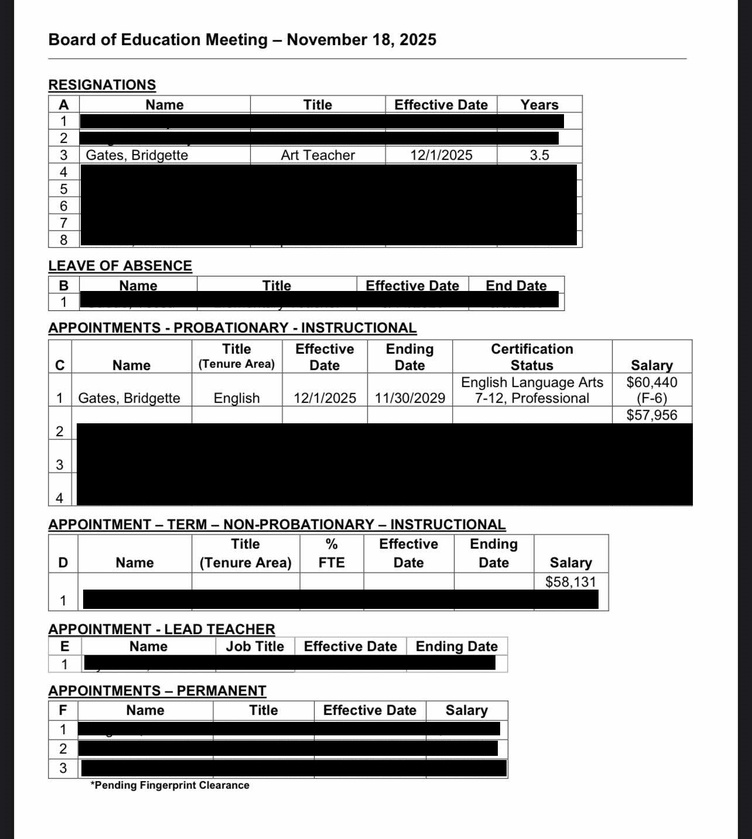
Trash Media Group has learned that the art teacher at the center of a long-running series of complaints allegedly resigned effective December 1st. That resignation, however, did not remove her from the school environment. Instead, sources indicate she was rehired into the English Department on the very same date. No announcement was made, no explanation was offered, and no effort was taken to inform families, staff, or the public about the stunning same-day transition.


Information Obtained By Trash Media Shows The Resignation & Rehire Effective The Same Date December 1st 2025.


Quiet transfers like this are sometimes used by school districts to shift problematic employees without drawing outside attention, triggering public records, or risking union disputes. But in this case, the timing and secrecy raise serious questions about what the district was trying to avoid. A teacher whose conduct reportedly generated repeated warnings, internal complaints, and growing concern among students and staff was quietly removed from one classroom only to be placed into another, with full access to students, without so much as a pause or public acknowledgment.

People familiar with the art department describe months of strain and disruption. Complaints were raised through proper channels for an extended period, yet the district stalled, redirected, and downplayed issues rather than addressing them head-on. Staff members reported feeling frustrated and dismissed, and students described the classroom environment as unstable and sometimes distressing. These concerns were not isolated or sudden; they formed a pattern the district could not credibly claim to be unaware of.

This covert December 1st shuffle fits into a larger trend within the Watertown City School District, which has faced repeated criticism for downplaying serious issues, withholding timely information from families, and failing to communicate transparently with the community. Over the past year, the district’s public posture has routinely emphasized stability and control, even as teachers, parents, and students have described the exact opposite.


The key issue now is why the district chose to move this teacher quietly into another department rather than take meaningful action. If her conduct warranted removal from the art department, what justified immediately placing her in the English Department? If the district believed her to be fit for continued employment, why was the move handled in a way that ensured no one outside the central office would know it had even occurred? The decision to make the resignation and rehiring effective on the same day appears designed to eliminate any visible separation in her employment record, raising further questions about what the district hoped would remain hidden.

Trash Media Group has formally asked the Board of Education to clarify the circumstances surrounding the resignation, the rehiring, the complaints from the art department, and the lack of public disclosure. As of publication, the district has not responded to any request for comment.


A Screenshoot of Graphic Images Displayed In 7th Grade Art Class At Case Middle School.


Now that the story has reached national platforms, including Libs of TikTok with its enormous audience reach, the district can no longer rely on quiet transfers and internal fixes to escape scrutiny. Parents deserve to know why their children’s classrooms have been treated as pieces on a chessboard. Teachers deserve to understand why their concerns were ignored. And the community deserves honesty from a district that has repeatedly chosen secrecy over accountability.

Trash Media Group will continue investigating this situation as more information becomes available. Anyone with direct knowledge of the events surrounding the art department or the teacher’s reassignment is encouraged to reach out confidentially through email or phone at: [email protected] or (315) 783-6732.

 This story is far from finished; and the district’s silence will not make it go away.

Read full Article
"Watertown Schools’ Art Curriculum Exposes Students to Unfiltered Museum Archives, Contradicting Safety Claims"


By Chris O’Neil
Trash Media Group | https://www.trashmediagroup.org

What began as a simple Freedom of Information request about classroom materials has uncovered a much deeper concern within the Watertown City School District — one that directly contradicts its own claims about student internet safety.

Earlier this month, Trash Media Group filed a FOIA petition seeking details about artwork shown to 7th graders in a Watertown Middle School art class. The request centered on the inclusion of controversial Keith Haring imagery — material some parents described as “highly inappropriate” for children due to its sexual themes.

When the district complied with the records request, the curriculum documents provided something unexpected: a long list of official reference links used by the art department. Among them were multiple pages from the Museum of Modern Art (MoMA) in New York City.

Curious, Trash Media Group reviewed those links — and within minutes found they led directly to unfiltered museum archives. Many of these pages feature explicit and adult-themed works, including nude studies, erotic drawings, and other mature imagery by artists such as Egon Schiele, Henri Matisse, and John Coplans.

All of this material sits just a few clicks away from a 7th grader’s Chromebook, under the district’s officially approved curriculum.

This directly contradicts the district’s repeated assurances to parents that “comprehensive content filters” prevent students from accessing inappropriate websites. Either those filters were never implemented as promised, or the district’s curriculum itself is exempt from safety protocols — a major failure of oversight in both cases.

“They told us our kids were protected by filters,” one parent said after reviewing the FOIA packet. “Then we find out the district itself handed out links that bypass every safeguard.”

While it’s true that museums like MoMA and the Metropolitan Museum of Art are legitimate educational institutions, their archives are not filtered for minors. Most professional art databases include uncensored works that require adult discretion — a nuance apparently overlooked or ignored by the district when it approved its art syllabus.

This revelation raises new questions about how much scrutiny the Watertown School District applies when approving classroom resources, especially in courses dealing with visual or modern art.

Trash Media Group has now reached out to district officials for comment regarding:

  • who vetted and approved the inclusion of the MoMA and similar links,

  • whether these resources were reviewed for age-appropriate content, and

  • what the district’s “content security system” actually blocks, if anything.

Until those questions are answered, the district’s assurances of digital safety and educational responsibility ring hollow. We will update when we recieve further answers.

Read full Article
See More
Available on mobile and TV devices
google store google store app store app store
google store google store app tv store app tv store amazon store amazon store roku store roku store
Powered by Locals